
How to Sell Land Online in New Hampshire

Selling Land Online Starts With a Better Property File
Online land buyers make decisions from information. If your listing or inquiry only says “land for sale in New Hampshire,” serious buyers will need to ask basic questions before they can price it. A better property file gives buyers enough detail to decide whether the parcel fits their criteria and reduces the amount of back-and-forth you have to manage.
Gather the parcel ID, town, county, acreage, owner name, annual property taxes, tax map, deed, road frontage, access notes, zoning or use category, nearby utilities, wetlands or floodplain notes, current-use status, survey if available, and any association or private-road information. Add clear photos, screenshots of the tax map, and directions if the land is hard to find.
New Hampshire land varies widely. A small buildable lot near utilities, a wooded parcel in the Lakes Region, a private-road camp lot, and remote North Country acreage all need different explanations. The more specific you are about access, terrain, road status, and likely use, the more quickly qualified buyers can respond with realistic questions or offers.
Where Owners List New Hampshire Land Online

Common online options include land listing websites, general real estate portals, local classifieds, Facebook groups, marketplace sites, investor networks, and your own simple landing page. Each channel has tradeoffs. Land-specific websites may attract better buyers but can require good photos and pricing. Social channels can bring fast attention but also unqualified messages. A direct buyer form can be simpler but gives you fewer competing bids.
If you list by owner, write the listing as if the buyer has never been to the parcel. Explain how to reach it, whether access is deeded or informal, whether the road is public or private, whether utilities are nearby, and what the town records show. Avoid exaggerating buildability unless you have confirmed it with the municipality or a professional. Overstating what the land can do creates disputes later.
Pricing is the hardest online decision. Do not rely only on active listings, because asking prices can sit for months. Look for sold vacant land in the same town or county, similar acreage, similar access, and similar utility or buildability characteristics. If sold data is thin, compare tax assessment, current competing listings, and direct buyer offers to establish a range.
How to Screen Online Land Buyers Before You Waste Time
Online exposure brings legitimate buyers, curious browsers, wholesalers, low-ball investors, and people who never close. Screen early. Ask whether the buyer is paying cash or using financing, whether they have bought land in New Hampshire before, what inspection period they need, whether they will use a title company, and whether they can provide proof of funds or an earnest-money deposit.
Be cautious with vague messages that avoid property details, ask you to sign quickly, or promise a high number before reviewing access and title. A real buyer should care about road frontage, deeded access, taxes, wetlands, zoning, liens, and closing costs. If they do not ask any land-specific questions, they may be trying to lock the property up and resell the contract rather than close themselves.
Use written agreements and a neutral closing process. Even if you find the buyer online, funds and documents should move through a title company or closing attorney. The purchase agreement should state price, deposit, closing deadline, inspection rights, who pays which costs, what happens if title defects appear, and how taxes are prorated or paid.
Photos, Maps, and Descriptions That Help Land Sell Online
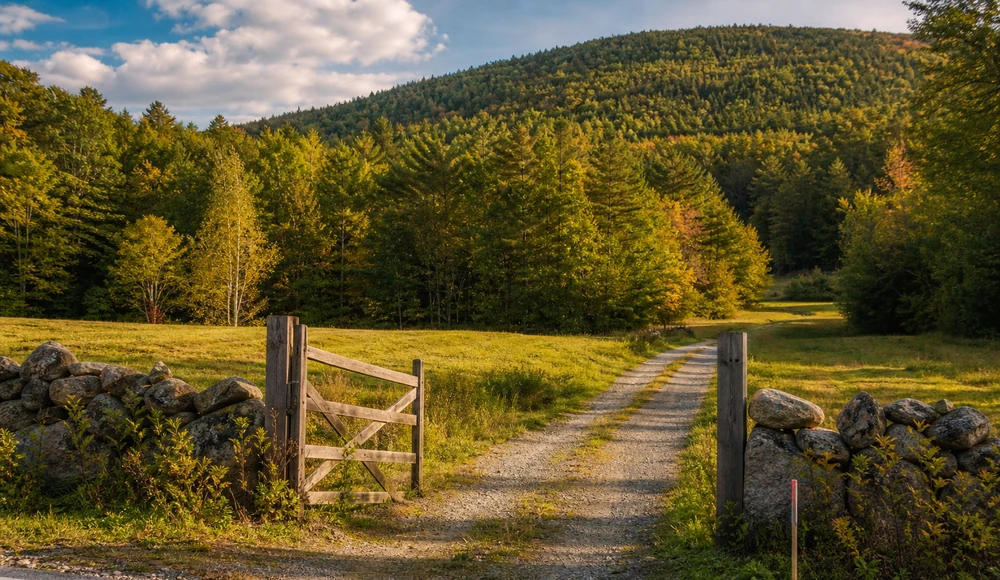
Land photos should show access, road frontage, terrain, tree cover, fields, water features, views, neighboring development, signs, and any problem areas. If you cannot visit, use tax maps and public aerial imagery, but be clear that the images are map references rather than current on-the-ground photos. Buyers appreciate honesty more than staged descriptions.
For descriptions, lead with the practical facts: acreage, town, county, access, road type, tax amount, approximate dimensions, and known restrictions. Then describe likely uses without guaranteeing approvals. For example, say the parcel may appeal to buyers looking for recreation, timber, privacy, or future building subject to town and state requirements. That is safer than promising a house site if no septic, driveway, or building review has been done.
Include common New Hampshire concerns such as wetlands, steep slopes, seasonal roads, private-road maintenance, current-use classification, lake or mountain-area rules, and utility distance. A buyer who understands those issues up front is more likely to make an offer that survives due diligence.
Comparing an Online Listing With a Direct Cash Offer
An online listing can create competition, but it also creates work. You may answer dozens of messages, schedule site visits, explain maps, negotiate price, wait for financing, and restart if a buyer disappears. If the land is easy to build on and priced well, that effort may be worthwhile. If the parcel is remote, inherited, tax-delinquent, landlocked, wet, steep, or hard to access, the retail path can be slower.
A direct cash offer is a different tool. It may not match the highest possible retail price, but it can give you a defined buyer, a shorter timeline, and fewer showings. That is valuable when you live out of state, want to stop paying taxes, need estate property sold, or do not want to manage online inquiries. The comparison should focus on net proceeds, closing certainty, and effort required.
Before deciding, put both paths on one page. Estimate listing price, likely negotiation, commission if any, closing costs, survey or cleanup costs, holding time, taxes, and the chance the buyer closes. Then compare a written cash offer with clear terms. Some owners choose the listing route. Others choose certainty because the difference after time and expenses is not worth the delay.
Online Safety and Documentation Tips
Do not send sensitive personal documents to strangers who have not been screened. Share public parcel information first, then use a title company for owner verification and closing documents. Be careful with wire instructions, last-minute payment changes, and buyers who ask to bypass normal closing procedures.
Keep records of messages, offers, counteroffers, signed agreements, maps, title notes, and closing statements. If multiple owners are involved, make sure everyone sees the same terms. If you are selling inherited land, trust-owned land, or land with unclear title, tell buyers early that closing depends on title review and required signatures.
The internet makes it easier to find buyers, but it does not replace due diligence. A clean online land sale still needs accurate facts, buyer screening, written terms, and a proper closing.
Bottom Line: Use Online Reach, But Control the Process
Selling New Hampshire land online can work well when the listing is specific, the price is realistic, and buyers are screened before they consume your time. Build a strong property file, explain access and limitations clearly, and insist on written closing terms.
If you would rather skip listing work, compare a direct cash offer. You can still use online information to understand value, but a cash buyer may give you a simpler path if speed, privacy, and certainty matter more than waiting for the highest possible retail buyer.
Practical Checklist Before You Publish an Online Listing
Before publishing, read the listing as if you were an out-of-state buyer seeing the parcel for the first time. Can that buyer identify the property, understand how to reach it, estimate carrying costs, and know what questions remain? If not, add the missing facts before the listing goes live.
Use a dedicated email folder or simple spreadsheet to track inquiries. Note the buyer name, phone number, offer amount, financing status, questions asked, and next step. Online land sales can become messy when several buyers are discussing terms at once and the seller cannot remember who agreed to what.
Set boundaries for site visits. Some rural parcels are hard to locate, have seasonal roads, or cross private property. Give buyers accurate directions and access instructions, but do not invite trespass or unsafe visits. If access is uncertain, say that the buyer should verify legal and physical access during due diligence.
Finally, decide in advance what offer terms matter most. Price is important, but so are deposit, inspection deadline, closing date, closing-cost responsibility, and whether the buyer can close remotely with you. Online exposure is useful only if it leads to a buyer who can perform.
Good online marketing is not about making the parcel sound perfect. It is about helping the right buyer recognize the opportunity and helping the wrong buyer opt out before wasting your time.
Frequently Asked Questions
Can I sell New Hampshire land online without an agent?
Yes. Owners can market land online, negotiate directly, and close through a title company, but they must handle pricing, buyer screening, documents, and title questions.
What information should I include in an online land listing?
Include parcel ID, acreage, town, county, road access, zoning or use notes, taxes, utilities, maps, photos, known restrictions, and whether you will consider a cash offer.
Is an online cash offer safer than listing by owner?
It depends on the buyer. A real cash buyer should explain proof of funds, written terms, title-company closing, inspection period, and who pays closing costs.
Need to sell your New Hampshire land? We buy land directly from owners for cash, with no fees, no commissions, and we close in as little as 2 weeks.